.
TrafficRevenue

Saucony Kinvara TR Trail Shoe: First Run Thoughts

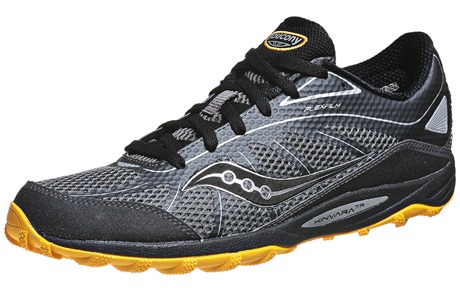
Saucony Kinvara TR yellowIf you've been reading this blog for any length of time you know that I'm a big fan of the Saucony Kinvara running shoe - it's the shoe that has carried me through my last two marathons, and is a personal favorite for long runs on the road. Lately, however, I've been doing a lot of my runs in lightweight trail shoes as I'm working on reviews of the Brooks Pure Grit and Merrell Mix Master 2 (I'm liking both a lot!). Thus, it was with a fair amount of excitement that I received a package today from Running Warehouse containing a pair of the new Saucony Kinvara TR (these were a personal purchase). The Kinvara TR is being marketed as the trail running version of Saucony's extremely popular lightweight road shoe, and it's one of the most eagerly awaited shoe releases of this summer (at least it was for me!).

My excitement to try out the Kinvara TR quickly gave way to skepticism when I opened the box. The shoes look fantastic from an aesthetic standpoint, but when looking at the last shape it has a distinct “bullet-shape” that I know from past experience does not work too well for me (e.g., in the Saucony Grid Type A4). The forefoot looked to be only a tad wider than the midfoot, and the forefoot came to a distinct pointed taper as the forefoot angles inward on both sides (see image below). I like a shoe that hugs my heel and midfoot closely, and that opens up into a spacious forefoot. This shoe did not look to fit that mold.

Saucony Kinvara TR Top

Putting the shoes on my feet did not provide any reassurance – they are definite toe-squeezers, which is a huge red flag for me. I pulled the shoes off and took out the insoles, and was comforted by the fact that the inserts were fairly well-cushioned, a bit more-so in the heel than in the forefoot. I’ve found with many shoes that swapping out a factory insole with a very thin one from another shoe can make a world of difference when it comes to fit (I prefer older Nike Free insoles or the fantastic insoles from the Skechers Go Bionic). Swapping out the insoles made the shoes more comfortable, and I decided to give them a go on a run (it may be worth trying to size up 1/2 size if you buy these shoes).

As I stood on the road in front of my house, I thought really hard about whether I wanted to go back in and package the shoes back up for a return. I was that concerned about how the forefoot fit felt. But, recalling that the Nike Free 3.0 v4 felt similar and loosened up a bit as it broke in, I decided to go for it.

Saucony Kinvara TR side

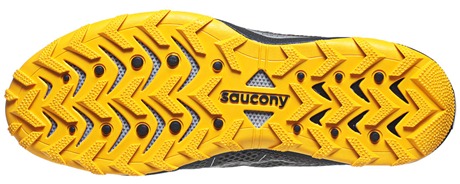
Turns out it was a good idea. With the swapped insole and loose lacing up front, the shoes felt progressively better as I ran in them. A bit of break-in really seemed to help. The fit is still off – sloppy in the midfoot and too tapered up front, but it’s tolerable on the run. I ran 7.5 miles in them, mostly on roads for today (it was a speedwork day, ran strides and 4x1200m intervals in them), and they handled the asphalt just fine. They have a fairly substantial rock plate, and on the few stretches that I ran on gravel and rutty asphalt they provided plenty of rock protection. The outsole looks to be very durable, and feel underfoot is firmer than the road Kinvara.

Saucony Kivara TR Sole yellow

I plan to get some trail miles on these shoes soon, maybe tomorrow, but my first impression is that the Saucony Peregrine is a closer trail sibling to the road Kinvara than this shoe. The fit feels very different, and hopefully will be improved in future iterations as I really like most other aspects of this shoe. The sole is solid, and at 3mm drop (18mm heel, 15mm forefoot) should appeal to those who like more minimal shoes. Weight is 8.9oz in size 9, which is comparable to other shoes I like in the lightweight trail category. But, if I had to run a trail 50K tomorrow I’d probably go with the Merrell Mix Master 2 since it fits my foot almost perfectly. Who knows, things may change with additional miles, but my initial run in the Kinvara TR did not vault it to the top of my lightweight trail running list.

Have you tried the Kinvara TR? What are your thoughts on the fit? Leave a comment!

The Saucony Kinvara TR is available for purchase at Running Warehouse.

Saucony Kinvara TR Trail Shoe: First Run Thoughts

Saucony Kinvara TR yellowIf you've been reading this blog for any length of time you know that I'm a big fan of the Saucony Kinvara running shoe - it's the shoe that has carried me through my last two marathons, and is a personal favorite for long runs on the road. Lately, however, I've been doing a lot of my runs in lightweight trail shoes as I'm working on reviews of the Brooks Pure Grit and Merrell Mix Master 2 (I'm liking both a lot!). Thus, it was with a fair amount of excitement that I received a package today from Running Warehouse containing a pair of the new Saucony Kinvara TR (these were a personal purchase). The Kinvara TR is being marketed as the trail running version of Saucony's extremely popular lightweight road shoe, and it's one of the most eagerly awaited shoe releases of this summer (at least it was for me!).

My excitement to try out the Kinvara TR quickly gave way to skepticism when I opened the box. The shoes look fantastic from an aesthetic standpoint, but when looking at the last shape it has a distinct “bullet-shape” that I know from past experience does not work too well for me (e.g., in the Saucony Grid Type A4). The forefoot looked to be only a tad wider than the midfoot, and the forefoot came to a distinct pointed taper as the forefoot angles inward on both sides (see image below). I like a shoe that hugs my heel and midfoot closely, and that opens up into a spacious forefoot. This shoe did not look to fit that mold.

Saucony Kinvara TR Top

Putting the shoes on my feet did not provide any reassurance – they are definite toe-squeezers, which is a huge red flag for me. I pulled the shoes off and took out the insoles, and was comforted by the fact that the inserts were fairly well-cushioned, a bit more-so in the heel than in the forefoot. I’ve found with many shoes that swapping out a factory insole with a very thin one from another shoe can make a world of difference when it comes to fit (I prefer older Nike Free insoles or the fantastic insoles from the Skechers Go Bionic). Swapping out the insoles made the shoes more comfortable, and I decided to give them a go on a run (it may be worth trying to size up 1/2 size if you buy these shoes).

As I stood on the road in front of my house, I thought really hard about whether I wanted to go back in and package the shoes back up for a return. I was that concerned about how the forefoot fit felt. But, recalling that the Nike Free 3.0 v4 felt similar and loosened up a bit as it broke in, I decided to go for it.

Saucony Kinvara TR side

Turns out it was a good idea. With the swapped insole and loose lacing up front, the shoes felt progressively better as I ran in them. A bit of break-in really seemed to help. The fit is still off – sloppy in the midfoot and too tapered up front, but it’s tolerable on the run. I ran 7.5 miles in them, mostly on roads for today (it was a speedwork day, ran strides and 4x1200m intervals in them), and they handled the asphalt just fine. They have a fairly substantial rock plate, and on the few stretches that I ran on gravel and rutty asphalt they provided plenty of rock protection. The outsole looks to be very durable, and feel underfoot is firmer than the road Kinvara.

Saucony Kivara TR Sole yellow

I plan to get some trail miles on these shoes soon, maybe tomorrow, but my first impression is that the Saucony Peregrine is a closer trail sibling to the road Kinvara than this shoe. The fit feels very different, and hopefully will be improved in future iterations as I really like most other aspects of this shoe. The sole is solid, and at 3mm drop (18mm heel, 15mm forefoot) should appeal to those who like more minimal shoes. Weight is 8.9oz in size 9, which is comparable to other shoes I like in the lightweight trail category. But, if I had to run a trail 50K tomorrow I’d probably go with the Merrell Mix Master 2 since it fits my foot almost perfectly. Who knows, things may change with additional miles, but my initial run in the Kinvara TR did not vault it to the top of my lightweight trail running list.

Have you tried the Kinvara TR? What are your thoughts on the fit? Leave a comment!

The Saucony Kinvara TR is available for purchase at Running Warehouse.

Mizuno Wave Ekiden Racing Shoe Coming to the US

For a long time, Mizuno has had only one shoe that really hits my sweet spot: the Mizuno Wave Universe. I’ve tried both the Ronin and Musha, and though they’re solid shoes, neither were a very good match for me.

I’ve long thought that Mizuno had a big gap in it’s offerings between the Universe and the Ronin/Musha lightweight trainer combo. This gap is soon to be filled by the Mizuno Wave Ekiden. I hinted at this shoe in my post about Mizuno’s forthcoming zero drop shoes, and it looks like it’s due to arrive here in the US in January 2013. According to the Running Warehoue blog, the Ekiden has a 6mm heel-forefoot drop, and weighs in at just 4.6 oz (the sole is very reminiscent of that of the Universe). The MSRP is $115.00, which is a bit on the high side in my opinion - we’ll have to wait and see what durability looks like.

Here are a few photos from Running Warehouse - looks like a promising shoe!

Mizuno Wave EkidenMizuno Wave Ekiden Sole

Mizuno Wave Ekiden Racing Shoe Coming to the US

For a long time, Mizuno has had only one shoe that really hits my sweet spot: the Mizuno Wave Universe. I’ve tried both the Ronin and Musha, and though they’re solid shoes, neither were a very good match for me.

I’ve long thought that Mizuno had a big gap in it’s offerings between the Universe and the Ronin/Musha lightweight trainer combo. This gap is soon to be filled by the Mizuno Wave Ekiden. I hinted at this shoe in my post about Mizuno’s forthcoming zero drop shoes, and it looks like it’s due to arrive here in the US in January 2013. According to the Running Warehoue blog, the Ekiden has a 6mm heel-forefoot drop, and weighs in at just 4.6 oz (the sole is very reminiscent of that of the Universe). The MSRP is $115.00, which is a bit on the high side in my opinion - we’ll have to wait and see what durability looks like.

Here are a few photos from Running Warehouse - looks like a promising shoe!

Mizuno Wave EkidenMizuno Wave Ekiden Sole

“Research Isn’t Everything…” – Great Post By Physiotherapist Tom Goom

If there’s one thing I’ve learned over the past few years it’s that both research and individual experience (yes, anecdotal evidence!) can be equally valuable sources of information when attempting to make decisions about which type of shoe to wear, whether or not to change your running form, which training methods to employ, etc. In fact, I’ve written about the topic a number of times, both on this blog and in my book.

I wanted to take a moment to point you to a great post by physiotherapist Tom Goom titled “Research isn’t everything…” Like me, Tom sees value in scientific research, but also realizes that research studies can often have major limitations, one of which is that they often favor group mean responses over individual responses. Tom realizes that if a particular treatment method (e.g., icing) continually shows beneficial results for some subset of his patients, he’s not going to abandon it simply because research results are inconclusive.

Here’s an excerpt where Tom shares a bit of his point of view on the subject:

“Research is part of our reasoning process, not the entirety of it. Experience and individual circumstances make up much of our decision making process. So ice may not have great research but I've seen it work for hundreds of people so I will continue to recommend it. Warm-up may not have concrete evidence to show it reduces injury risk but I feel a whole lot more comfortable running if I've warmed up properly so I'll keep doing it. The literature on running shoes might be inconclusive but when a patient presents with plantar fasciitis and can't even walk barefoot I won't be telling them to run barefoot!”

Very well-stated!

In much the same way, there was no chance I was going to stop any of the runner’s at mile 50 of the VT100 ultra this weekend (I crewed a friend) and tell them that the Hoka One One shoes they were wearing might be a bad idea since there is no scientific evidence showing that they provide any benefit in an ultra! If anything, I left the race really curious to finally give the ultra-cushioned shoes a try myself given how many of the faster runners had them on (and yes, I have video!). These people have done ridiculous amounts of mileage, probably in a variety of shoes, and they know what works best for their bodies in various circumstances.

Head over to Tom’s RunningPhysio blog to read the full article, as well as his follow-up post titled “Oops I opened a can of worms!

“Research Isn’t Everything…” – Great Post By Physiotherapist Tom Goom

If there’s one thing I’ve learned over the past few years it’s that both research and individual experience (yes, anecdotal evidence!) can be equally valuable sources of information when attempting to make decisions about which type of shoe to wear, whether or not to change your running form, which training methods to employ, etc. In fact, I’ve written about the topic a number of times, both on this blog and in my book.

I wanted to take a moment to point you to a great post by physiotherapist Tom Goom titled “Research isn’t everything…” Like me, Tom sees value in scientific research, but also realizes that research studies can often have major limitations, one of which is that they often favor group mean responses over individual responses. Tom realizes that if a particular treatment method (e.g., icing) continually shows beneficial results for some subset of his patients, he’s not going to abandon it simply because research results are inconclusive.

Here’s an excerpt where Tom shares a bit of his point of view on the subject:

“Research is part of our reasoning process, not the entirety of it. Experience and individual circumstances make up much of our decision making process. So ice may not have great research but I've seen it work for hundreds of people so I will continue to recommend it. Warm-up may not have concrete evidence to show it reduces injury risk but I feel a whole lot more comfortable running if I've warmed up properly so I'll keep doing it. The literature on running shoes might be inconclusive but when a patient presents with plantar fasciitis and can't even walk barefoot I won't be telling them to run barefoot!”

Very well-stated!

In much the same way, there was no chance I was going to stop any of the runner’s at mile 50 of the VT100 ultra this weekend (I crewed a friend) and tell them that the Hoka One One shoes they were wearing might be a bad idea since there is no scientific evidence showing that they provide any benefit in an ultra! If anything, I left the race really curious to finally give the ultra-cushioned shoes a try myself given how many of the faster runners had them on (and yes, I have video!). These people have done ridiculous amounts of mileage, probably in a variety of shoes, and they know what works best for their bodies in various circumstances.

Head over to Tom’s RunningPhysio blog to read the full article, as well as his follow-up post titled “Oops I opened a can of worms!

Saucony Kinvara TR Trail Shoe Now Available at Running Warehouse

Quick post to alert you that the Saucony Kinvara TR trail running shoe is now available at Running Warehouse. The much anticipate Kinvara TR is a lightweight trail shoe (8.9oz) with a 3mm drop from heel to forefoot (18mm heel, 15mm forefoot). For those who, like me, are big fans of the Kinvara road shoe, it will be very interesting to see how the trail version stacks up.Saucony Kinvara TR Black

Saucony Kinvara TR Black SideSaucony Kinvara TR Black Sole

I have a pair of Kinvara trails on order from RW that should arrive within the next few days, and I’ll try to get a first impressions post up later this week. I also have reviews of the Merrell Mix Master 2 and Brooks Pure Grit in the works, both of which I like a lot!

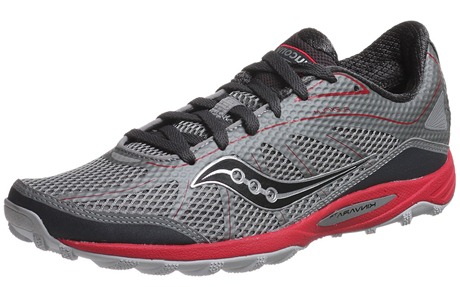
Here are the two other Saucony Kinvara TR color options available at Running Warehouse:

Saucony Kinvara TR GraySaucony Kinvara TR yellow

Saucony Kinvara TR Trail Shoe Now Available at Running Warehouse

Quick post to alert you that the Saucony Kinvara TR trail running shoe is now available at Running Warehouse. The much anticipate Kinvara TR is a lightweight trail shoe (8.9oz) with a 3mm drop from heel to forefoot (18mm heel, 15mm forefoot). For those who, like me, are big fans of the Kinvara road shoe, it will be very interesting to see how the trail version stacks up.Saucony Kinvara TR Black

Saucony Kinvara TR Black SideSaucony Kinvara TR Black Sole

I have a pair of Kinvara trails on order from RW that should arrive within the next few days, and I’ll try to get a first impressions post up later this week. I also have reviews of the Merrell Mix Master 2 and Brooks Pure Grit in the works, both of which I like a lot!

Here are the two other Saucony Kinvara TR color options available at Running Warehouse:

Saucony Kinvara TR GraySaucony Kinvara TR yellow

adidas adiPure Adapt: The Ugly Duckling of adidas’ Natural Running Line

adidas Adipure AdaptShoe giant adidas is about to release three new shoes in what it is referring to as its “natural running collection.” The shoes are the Adapt, Gazelle, and Motion, and the three shoes allow for a step-down approach to running in less shoe.

According to Running Warehouse, the Motion is a 7.5oz, 8mm drop shoe (stack height = 23mm heel, 15mm forefoot) targeted as a first step toward less shoe:

adidas Motion

Running Warehouse lists the the adidas Gazelle as a 6.0oz, 6mm drop shoe (stack height = 17mm heel, 11mm forefoot) that would seem to fit squarely in the transitional category:

adidas Gazelle

Running Warehouse lists the adidas adipure Adapt as a 4.8oz, 4mm drop shoe (stack height = 15mm heel, 11mm forefoot) – this is the most minimal of the three shoes:

adidas Adipure Adapt side

I believe in being brutally honest when I write reviews, and this review is a good example. I’ve had the adidas Adapts since early this year, but will openly admit that I have not run in them very much. My reason is a rather silly one, but it’s one that I think is going to cause a lot of problems for this shoe: it’s really ugly. In fact, I ran in them yesterday so I could at least provide a few comments on fit and feel on the run, and before I left the house my wife caught sight of me and asked what the heck the things on my feet were. She said they looked like superhero shoes (she also told me Saucony Hattoris looked like prison loafers – she keeps it real!). I have to admit she’s right – pair them up with some blue tights and I could be fighting crime in no-time!

The other major problem is that others who have seen the Adapts have commented that they look like water shoes. And yes, they do. $90 water shoes to be exact. I think adidas is going to have a very difficult time finding a market for these shoes for these two reasons: aesthetics are a problem (at least put some white adidas stripes on them!), and they look like shoes you could buy for 5 bucks at Target.

adidas Adipure Adapt top

Now, I know plenty of people who could care less what their shoes look like (I personally like a more traditional looking shoe), so I do feel it’s warranted to make a few comments about how these shoes feel. The stretchy upper of the Adapt is actually pretty cool. It feels like the material compression shorts are made of, and it has PU overlays that are spaced to allow stretch in some areas moreso than others. However, a drawback to the material and to the form-fitting nature of the upper is that the shoe runs pretty warm (though it was raining hard when I ran in them yesterday and splashing through puddles felt great!). The shoe is reasonably foot-shaped (seems like a strange thing to say about a shoe), but the stretchy upper does compress my little toe a bit.

adidas Adipure Adapt sole

The best part about the adidas Adapt is the sole. It’s not a barefoot style sole, and is actually pretty well cushioned. There is rubber in all of the right places for a forefoot striker, so I expect sole durability will be quite good. The sole actually feels as if it’s curved a bit so that the center of the forefoot sits a bit lower than the medial and lateral edges, probably due to the stretch upper pulling up a bit at the sides – I actually found this to feel really good when forefoot running in them – allowed for a nice lateral to medial role as the sole compressed (note: the U-shaped sole in side-profile is also due to the stretch upper pulling up at the heel and toe – it flattens once you put your foot in it). The sole is plenty flexible, and felt really comfortable on the run.

Now, the big issue is that even though they feel good on the run, I would not buy this shoe myself. I simply could not stomach paying $90 for what looks and feels like a high-quality water sock. When I first got them I didn’t know about the other two shoes in the adidas natural running line, and I’m pleased to see that the Gazelle retains many of the features I like about the Adapt, and vastly improves on the aesthetics. I’m very much looking forward to trying out that shoe.

If I were adidas, I’d add some stripes and laces to the Adapt for round two, or at least a more pleasing design on the upper along with a lower price tag. But, nobody would have predicted that the Vibram Fivefingers would have been such a hit, so maybe my personal concerns are unwarranted. However, if I were a betting man, I’d bet the market for the adidas Adapt will be very small.

Should you wish to prove me wrong, the adidas Adapt can be purchased at Running Warehouse, along with what I predict will be the more popular shoes in the series: the Gazelle and Motion.

Curious to hear your thoughts – would you buy this shoe?

adidas adiPure Adapt: The Ugly Duckling of adidas’ Natural Running Line

adidas Adipure AdaptShoe giant adidas is about to release three new shoes in what it is referring to as its “natural running collection.” The shoes are the Adapt, Gazelle, and Motion, and the three shoes allow for a step-down approach to running in less shoe.

According to Running Warehouse, the Motion is a 7.5oz, 8mm drop shoe (stack height = 23mm heel, 15mm forefoot) targeted as a first step toward less shoe:

adidas Motion

Running Warehouse lists the the adidas Gazelle as a 6.0oz, 6mm drop shoe (stack height = 17mm heel, 11mm forefoot) that would seem to fit squarely in the transitional category:

adidas Gazelle

Running Warehouse lists the adidas adipure Adapt as a 4.8oz, 4mm drop shoe (stack height = 15mm heel, 11mm forefoot) – this is the most minimal of the three shoes:

adidas Adipure Adapt side

I believe in being brutally honest when I write reviews, and this review is a good example. I’ve had the adidas Adapts since early this year, but will openly admit that I have not run in them very much. My reason is a rather silly one, but it’s one that I think is going to cause a lot of problems for this shoe: it’s really ugly. In fact, I ran in them yesterday so I could at least provide a few comments on fit and feel on the run, and before I left the house my wife caught sight of me and asked what the heck the things on my feet were. She said they looked like superhero shoes (she also told me Saucony Hattoris looked like prison loafers – she keeps it real!). I have to admit she’s right – pair them up with some blue tights and I could be fighting crime in no-time!

The other major problem is that others who have seen the Adapts have commented that they look like water shoes. And yes, they do. $90 water shoes to be exact. I think adidas is going to have a very difficult time finding a market for these shoes for these two reasons: aesthetics are a problem (at least put some white adidas stripes on them!), and they look like shoes you could buy for 5 bucks at Target.

adidas Adipure Adapt top

Now, I know plenty of people who could care less what their shoes look like (I personally like a more traditional looking shoe), so I do feel it’s warranted to make a few comments about how these shoes feel. The stretchy upper of the Adapt is actually pretty cool. It feels like the material compression shorts are made of, and it has PU overlays that are spaced to allow stretch in some areas moreso than others. However, a drawback to the material and to the form-fitting nature of the upper is that the shoe runs pretty warm (though it was raining hard when I ran in them yesterday and splashing through puddles felt great!). The shoe is reasonably foot-shaped (seems like a strange thing to say about a shoe), but the stretchy upper does compress my little toe a bit.

adidas Adipure Adapt sole

The best part about the adidas Adapt is the sole. It’s not a barefoot style sole, and is actually pretty well cushioned. There is rubber in all of the right places for a forefoot striker, so I expect sole durability will be quite good. The sole actually feels as if it’s curved a bit so that the center of the forefoot sits a bit lower than the medial and lateral edges, probably due to the stretch upper pulling up a bit at the sides – I actually found this to feel really good when forefoot running in them – allowed for a nice lateral to medial role as the sole compressed (note: the U-shaped sole in side-profile is also due to the stretch upper pulling up at the heel and toe – it flattens once you put your foot in it). The sole is plenty flexible, and felt really comfortable on the run.

Now, the big issue is that even though they feel good on the run, I would not buy this shoe myself. I simply could not stomach paying $90 for what looks and feels like a high-quality water sock. When I first got them I didn’t know about the other two shoes in the adidas natural running line, and I’m pleased to see that the Gazelle retains many of the features I like about the Adapt, and vastly improves on the aesthetics. I’m very much looking forward to trying out that shoe.

If I were adidas, I’d add some stripes and laces to the Adapt for round two, or at least a more pleasing design on the upper along with a lower price tag. But, nobody would have predicted that the Vibram Fivefingers would have been such a hit, so maybe my personal concerns are unwarranted. However, if I were a betting man, I’d bet the market for the adidas Adapt will be very small.

Should you wish to prove me wrong, the adidas Adapt can be purchased at Running Warehouse, along with what I predict will be the more popular shoes in the series: the Gazelle and Motion.

Curious to hear your thoughts – would you buy this shoe?

Mizuno Evo Levitas and Cursoris: Mizuno’s First Foray Into Zero Drop, Cushioned Shoes

The Running Warehouse Blog just posted a preview of two new cushioned zero drop shoes from Mizuno: the Mizuno Evo Levitas and Evo Cursoris. Both are due to come out in early 2013, and fill what is rapidly becoming a very crowded niche occupied by shoes like the currently available Altra Instinct, New Balance MR00, & Saucony Hattori, and the soon to be released Skechers Go Bionic, Saucony Virrata, & Brooks Pure Drift. Running Warehouse indicates that “zero drop with a bit more protection and increased comfort is set to be a big story in 2013,” and based on recent trends and product announcements I can’t help but agree.

Details on these shoes remain scant, but the Running Warehouse Blog reports that the Mizuno Evo Levitas is the more minimal of the two shoes, with a stack height of 15mm in both the heel and forefoot, a weight of 6.5 oz (men’s). It is also touted as having a wide forefoot and narrow midfoot. Here are some photos of the Levitas:

Mizuno LevitasMizuno Levitas 2

The Evo Cursoris provides a bit more cushion underfoot with a stack height of 18mm in the heel and forefoot, a weight of 7.5oz (men’s), and also is described as having a wide forefoot. Here are photos of the Cursoris:

Mizuno Cursoris

I’m pleased to see Mizuno increasing it’s variety of offerings at the more minimal end of the shoe scale. I was recently invited to join the Mizuno Mezamashii Project and this included a pair of free shoes, and the only shoe in the current catalogue that matches my tastes is the Wave Universe (though it’s a great one!). I’ve run in both the Ronin and Musha and though they are both solid choices in the transitional lightweight trainer/racer category, I find them a bit too much shoe for my taste. Had either the Levitas or Cursoris been available I would have jumped on them right away!

The one big question with both of these shoes, as it is with many minimalist shoes, will be durability relative to price. MSRP for the Levitas is $110, and for the Cursoris is $120. I wish more shoe companies would make shoes like the New Balance 730 – minimal yet extremely affordable. Nonetheless, it’s great to see another shoe company diversifying its offerings. If Mizuno would bring the Ekiden stateside they’d have quite the lineup!

Mizuno Evo Levitas and Cursoris: Mizuno’s First Foray Into Zero Drop, Cushioned Shoes

The Running Warehouse Blog just posted a preview of two new cushioned zero drop shoes from Mizuno: the Mizuno Evo Levitas and Evo Cursoris. Both are due to come out in early 2013, and fill what is rapidly becoming a very crowded niche occupied by shoes like the currently available Altra Instinct, New Balance MR00, & Saucony Hattori, and the soon to be released Skechers Go Bionic, Saucony Virrata, & Brooks Pure Drift. Running Warehouse indicates that “zero drop with a bit more protection and increased comfort is set to be a big story in 2013,” and based on recent trends and product announcements I can’t help but agree.

Details on these shoes remain scant, but the Running Warehouse Blog reports that the Mizuno Evo Levitas is the more minimal of the two shoes, with a stack height of 15mm in both the heel and forefoot, a weight of 6.5 oz (men’s). It is also touted as having a wide forefoot and narrow midfoot. Here are some photos of the Levitas:

Mizuno LevitasMizuno Levitas 2

The Evo Cursoris provides a bit more cushion underfoot with a stack height of 18mm in the heel and forefoot, a weight of 7.5oz (men’s), and also is described as having a wide forefoot. Here are photos of the Cursoris:

Mizuno Cursoris

I’m pleased to see Mizuno increasing it’s variety of offerings at the more minimal end of the shoe scale. I was recently invited to join the Mizuno Mezamashii Project and this included a pair of free shoes, and the only shoe in the current catalogue that matches my tastes is the Wave Universe (though it’s a great one!). I’ve run in both the Ronin and Musha and though they are both solid choices in the transitional lightweight trainer/racer category, I find them a bit too much shoe for my taste. Had either the Levitas or Cursoris been available I would have jumped on them right away!

The one big question with both of these shoes, as it is with many minimalist shoes, will be durability relative to price. MSRP for the Levitas is $110, and for the Cursoris is $120. I wish more shoe companies would make shoes like the New Balance 730 – minimal yet extremely affordable. Nonetheless, it’s great to see another shoe company diversifying its offerings. If Mizuno would bring the Ekiden stateside they’d have quite the lineup!